
Casting
When we are determining the method of casting we consider each particular job on its merits and in consultation with the customer, attempt to reach the optimum balance between cost effectiveness and product performance.
We now determine whether the part will be investment cast or sand cast.
Casting Methods
Investment Casting
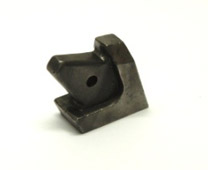
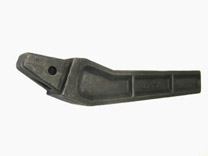
Investment Casting is the term applied to precision moulding using a metal die and ceramic coating in which the chosen metal is injected.
The mould material is usually:
|
HARD WAX
|
|
 |
|
LOST WAX
|
|
 |
|
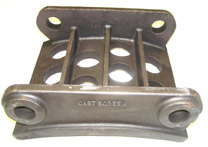
LOST FOAM
|
|
 |
Sand Casting
Sand Casting is considered the traditional method of casting. The various common methods of sand casting revolve around the types of binders used to maintain mould strength (resist the molten metal). These methods are:
CLAY BONDED / GREEN SAND
|
|
|
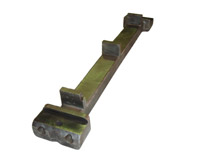
HARD BONDED / RESIN
|
 |
|
THERMO SETTING RESIN SAND / SHELL
|
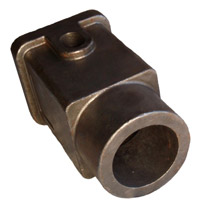 |
The main points we look at when deciding between sand and investment casting are;
- The size of the part
Investment casting is best suited for small parts up to a maximum of 80 kgs and 1.2 metres in length. Larger parts create too much pressure and distortion of the walls of the mould. Larger castings are best made as a sand cast. - Tolerances
Lower tolerances and a better surface finish can be achieved using the investment method. - Cost
As a general rule we can produce investment castings at a better price than sand castings. We only source castings from those who make them better than everyone else. This means that our sand castings come from countries where the costs of production tend to be higher than countries that produce high quality investment castings, thus they are more expensive.
Casting Alloys
At ATC GROUP we produce castings in a wide range of ferrous and non ferrous alloys.
We don’t try to over complicate the alloys we use. Unless a job specifically requires alloy manipulation – we use standard Australian and International materials.
We currently produce castings in the following materials:
STEEL |
||
|
LOW ALLOY
|
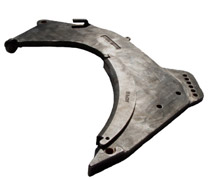
Ni-Cr-Mo- 4130 4140 5140 8630 |
 |
|
STAINLESS
|
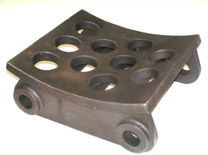
17-4PH, AISI-316, AISI-310, AISI-309 DUPLEX STAINLESS HEAT RESISTANT STAINLESS HK,HF |
 |
|
MANGANESE
|
AS 2027 WORK HARDENING | |
|
WHITEIRON
|
AS 2027/Ni Cr1 550 (Ni hard) AS 2027/Ni Cr27 (27% Chrome) |
|
ALLUMINUM
|
LM6 | 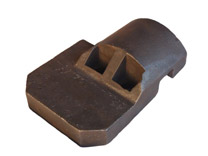 |